One Call vs. The Broker Nightmare: HR Relocation Done Right

Every year, HR managers across Canada hand a relocation to a discount broker and spend the next three weeks chasing a subcontractor they have never met, about a shipment they cannot track, for an employee who is already frustrated before day one at their new office. It does not have to go that way. Here is exactly how the difference between a moving broker and a licensed direct carrier plays out in a real corporate relocation. And what to look for before you sign anything.
What an HR Manager Is Actually Buying When They Book a Mover
When an HR team coordinates an employee relocation, they are not just buying a truck and a crew. They are buying accountability. They are buying a documented chain of custody for household goods, office equipment, and in some cases irreplaceable items like antiques, art, or a grand piano. They are buying a point of contact who will answer the phone on moving day, not redirect them to a third party.
The problem is that the moving industry is structured in a way that makes this accountability easy to obscure. A broker takes the booking, collects a deposit, and then assigns the actual move to a carrier they may never have worked with before. The HR manager thinks they are dealing with one company. In practice, they are dealing with two. And the one doing the physical work has no direct relationship with the client.
When something goes wrong on a brokered move, the broker points to the carrier and the carrier points back. The HR manager is left in the middle with a damaged shipment and no clear owner.
This is not a hypothetical. It is a pattern that shows up in consumer protection complaints, CBC reporting on Manitoba movers, and in the guidance published by the Canadian Association of Movers, which specifically advises clients to verify insurance, bonding, and carrier credentials before signing any moving contract.
The Broker Model: How It Works and Where It Breaks
A moving broker operates legally. That is worth saying plainly. Brokers are not scammers by definition. But the structure of the broker model creates risk that is entirely avoidable when you book directly with a licensed carrier.
Here is how the broker model typically works in a corporate relocation context. An HR manager gets a quote. Often a competitive one. From a company that presents itself as a full-service mover. That company is actually a booking intermediary. They do not own trucks. They do not employ movers. They match the job to a carrier from their network, often based on availability and margin rather than the carrier's track record with high-value or commercial moves.
For a standard residential move with no specialty items, this can work fine. But for corporate relocations involving office moving, warehouse moving, electronics moving, or fragile item packing for antiques and fine art, the margin for error narrows considerably. The carrier assigned to the job may have no experience with custom crating, no climate controlled storage for items in transit, and no process for inventory storage or document storage that meets a company's compliance requirements.
When something goes wrong. A damaged shipment, a missed delivery window, a billing dispute. The broker is one phone call removed from the problem. The carrier is another. The HR manager is left coordinating a three-way conversation while their employee waits in an empty apartment.
What a Direct Carrier Actually Controls
Quick Transfer Moving and Storage operates as a licensed United Van Lines agent out of its own physical facility on Pandora Avenue East in Winnipeg. That distinction matters more than most clients realize when they are evaluating moving quotes.
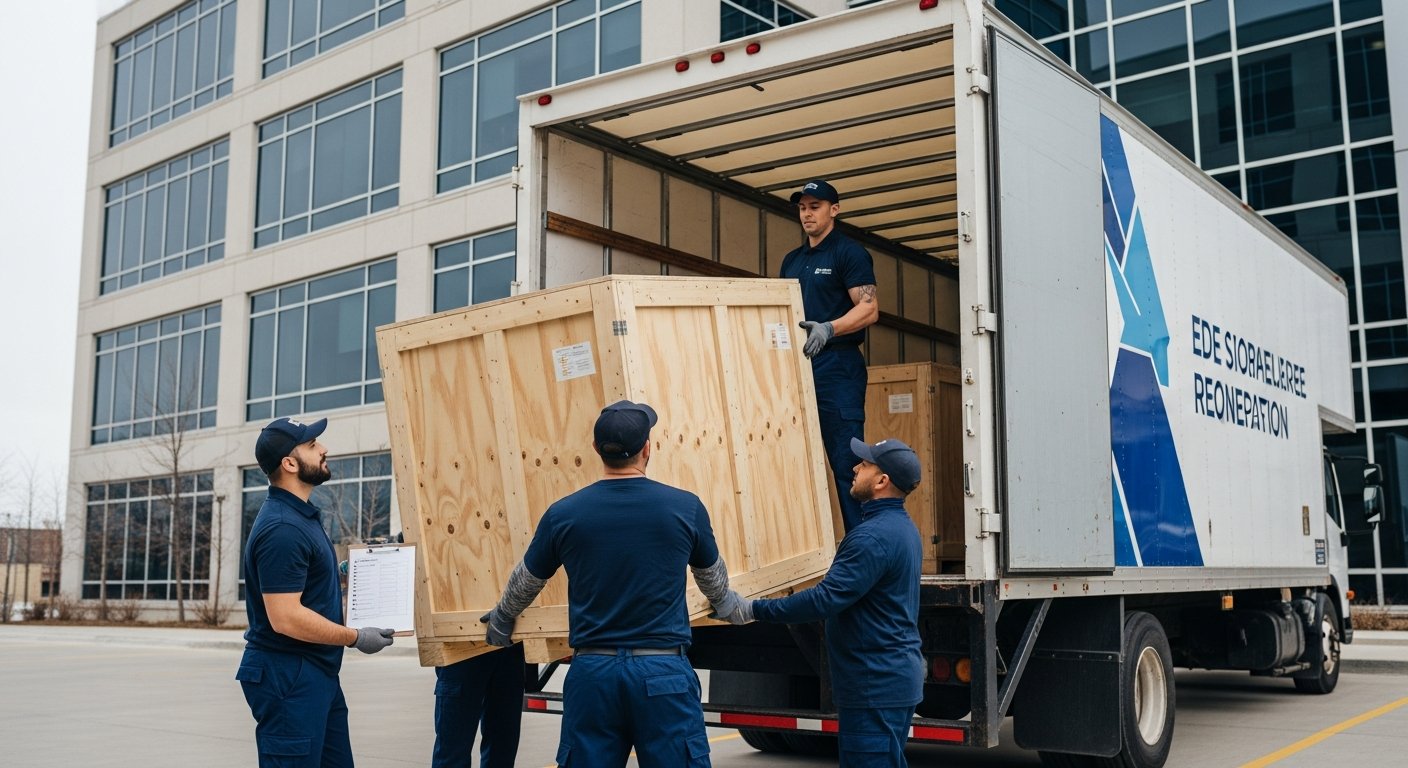
As a direct carrier, Quick Transfer employs its own crews, operates its own fleet, and manages its own warehouse. When a corporate client books a long distance moving job, a commercial relocation, or an international moving assignment, the same company that takes the call is the company that loads the truck. There is no handoff to an unknown subcontractor. There is no gap in accountability between the quote and the delivery.
The United Van Lines affiliation adds another layer of credibility that a local broker cannot replicate. United Van Lines is one of North America's most recognized moving networks, with carrier credentials, insurance frameworks, and service standards that apply to every move made under the network's flag. For an HR manager coordinating an employer-sponsored relocation across provincial lines or internationally, that network backing is not a marketing detail. It is a risk management tool.
A licensed United Van Lines agent is not just a mover with a better logo. It is a carrier with verifiable credentials, a physical address, and end-to-end accountability for every item on the inventory.
For corporate clients specifically, this means a moving consultation that produces a documented scope of work. It means a moving coordinator who is the single point of contact from quote to delivery. It means moving insurance that is clearly explained before the job starts, not discovered in fine print after something is damaged. And it means storage in transit options. Including climate controlled storage and secure storage. That are managed within the same facility, not farmed out to a third-party warehouse the client has never seen.
The Real Cost of Getting This Wrong
HR teams are used to thinking about relocation costs in terms of the moving quote. The actual cost of a failed corporate relocation is considerably higher and almost never appears on the original invoice.
Consider what happens when an employee relocation goes badly. The employee arrives at their new city to find their belongings delayed, damaged, or in dispute. They spend their first week on the phone with a broker's customer service line instead of onboarding. Their confidence in their new employer takes a hit before they have attended a single meeting. In competitive hiring markets, that experience has retention implications that dwarf the difference between a discount broker's quote and a professional carrier's quote.
For high-value items, the calculus is even sharper. A baby grand piano moving job handled by a crew without proper piano moving experience can result in damage that no standard moving insurance policy will cover adequately. The same is true for fine art moving, antique moving, and electronics moving involving sensitive commercial equipment. Custom crating and white glove moving exist precisely because some items cannot be treated as general freight. And a broker's assigned carrier may not offer either.
Quick Transfer has handled moves involving grand piano moving, commercial piano moving, art and antique moving, fragile item packing, and specialty item moving for Winnipeg clients for 67 years. That depth of experience is not something a broker can promise on behalf of an unknown subcontractor.
What to Ask Before You Book Any Corporate Relocation
The Canadian Association of Movers recommends getting at least three written quotes and verifying insurance and bonding before signing any moving contract. That is solid baseline advice. For corporate clients coordinating complex or high-value moves, the checklist needs to go further.
Before booking any mover for an employer-sponsored relocation, ask these questions directly:
Are you a licensed carrier or a broker? A carrier owns the trucks and employs the crew. A broker matches your job to someone else's. The answer to this question tells you everything about accountability.
Who will physically handle my employee's belongings? If the answer is anything other than the company you are speaking with, ask for the subcontractor's credentials, insurance documentation, and references.
What is your process for high-value or fragile items? A credible mover will describe specific procedures for fragile item moving, custom crating, and climate controlled storage for sensitive goods. Vague reassurances are a warning sign.
What does your moving insurance actually cover? Standard carrier liability for household goods moving is often calculated by weight, not value. For a corporate relocation involving antiques, electronics, or specialty equipment, that coverage may be inadequate. Ask about full replacement value options.
Do you have a physical facility in the city you are operating from? A warehouse address is a trust signal. It means the company has a fixed, accountable presence in the market. Fly-by-night operators do not maintain warehouse space.
Who is my single point of contact from quote to delivery? A moving coordinator who owns the relationship end-to-end is the difference between a managed relocation and a logistics scramble.
Quick Transfer provides written estimates that itemize every charge before the job begins. There are no fuel surcharges discovered on moving day, no stair fees added after the truck is loaded. The quote is the price. That commitment is backed by 67 years of family-owned accountability and the service standards of the United Van Lines network.
How the Right Corporate Relocation Partner Reflects on HR
For HR teams, the moving company they choose is a reflection of how the company treats its people during a transition that is, by any measure, one of the most stressful events in a person's life. A smooth, professionally managed relocation. Full service moving with a dedicated coordinator, secure storage when timing does not align perfectly, and careful handling of every item from packing services through delivery acceptance. Signals to the relocating employee that the company takes their wellbeing seriously.
The inverse is equally true. A failed relocation, a damaged shipment, a week of unanswered calls to a broker's customer service line. These experiences follow an employee into their new role. They become stories told to colleagues. In a tight labor market, they have real costs.
Quick Transfer has supported corporate relocations, commercial moving, business relocation, and office moving for Winnipeg companies for decades. The third generation of the Mueller family is now stepping into leadership with the same commitment that built the company's reputation: reliable service, careful planning, and the kind of personal accountability that only a family-owned business with 67 years of local roots can deliver.
Plan Your Corporate Relocation With a Licensed United Van Lines Agent
If your company is planning an employee relocation. Local, long distance, or international. The single most important decision you will make is whether to book a broker or a direct carrier. The difference shows up not in the quote, but in what happens when the move gets complicated.
Quick Transfer Moving and Storage is Winnipeg's licensed United Van Lines agent, operating from a physical facility on Pandora Avenue East with its own fleet, its own crews, and its own warehouse. From residential moving and apartment moving to commercial relocation, warehouse moving, and international moving, every job is handled under one roof with one point of accountability.
Get your free corporate relocation quote from Winnipeg's United Van Lines agent. Call Quick Transfer today or request a moving estimate online. One call. One carrier. Zero surprises.

Ralph Mueller
President
Ralph Mueller leads Quick Transfer Moving and Storage through its third generation of serving Winnipeg families and businesses. As President, he oversees the company's full-service operations from residential and commercial moves to specialized freight and international logistics—while maintaining the United Van Lines partnership and the physical facility on Pandora Avenue East that anchors the company's local credibility. His perspective reflects a commitment to reliability and professionalism that has built Quick Transfer's reputation over 67 years in the market.
More from Ralph Mueller →