Why International Moves From Winnipeg Fail at Customs
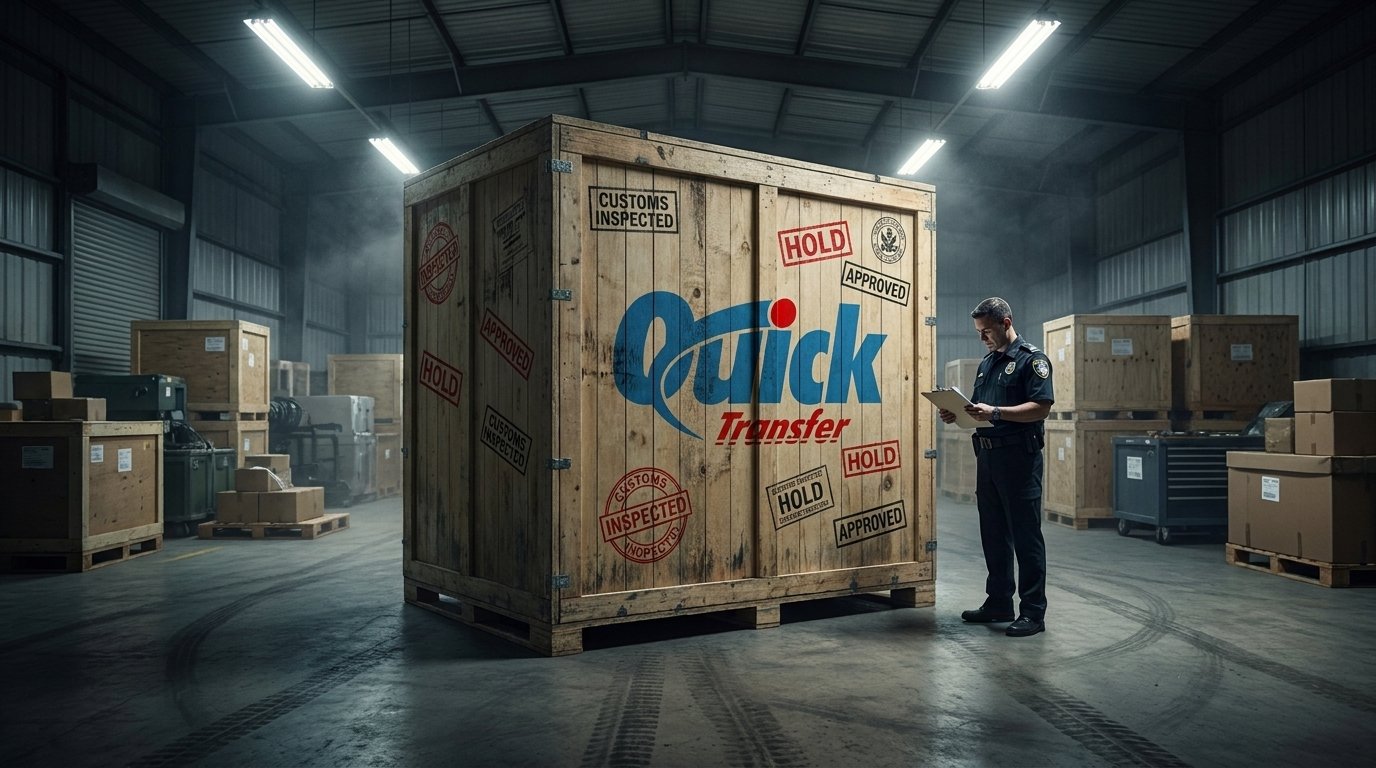
You spent months preparing. You hired movers, packed your home, arranged temporary housing, and booked your flights. Then, somewhere between Winnipeg and your destination, your shipment disappears into a customs queue. And nobody can tell you when it's coming out. This is not a rare horror story. It is the predictable result of one avoidable category of mistakes.
The Real Reason Shipments Get Stuck
Customs clearance is not a formality. It is a legal process governed by the destination country's import regulations, and those regulations vary significantly from one country to the next. A household goods shipment moving from Winnipeg to Germany operates under a completely different framework than one heading to Australia, the United States, or the UAE. What they share is this: customs authorities require accurate, complete documentation before they release anything.
The most common reason international moves from Winnipeg stall at the border is documentation that is incomplete, inaccurate, or submitted in the wrong format. Not damaged goods. Not mislabeled boxes. Paperwork.
The most common reason international moves from Winnipeg stall at the border is documentation that is incomplete, inaccurate, or submitted in the wrong format.
This matters because the consequences are not minor. A shipment held in customs storage accrues daily fees. In many countries, those fees are the shipper's responsibility, not the carrier's. A two-week delay can cost thousands of dollars in storage charges alone, before you factor in the disruption of living without your belongings in a new country.
What the Documentation Actually Requires
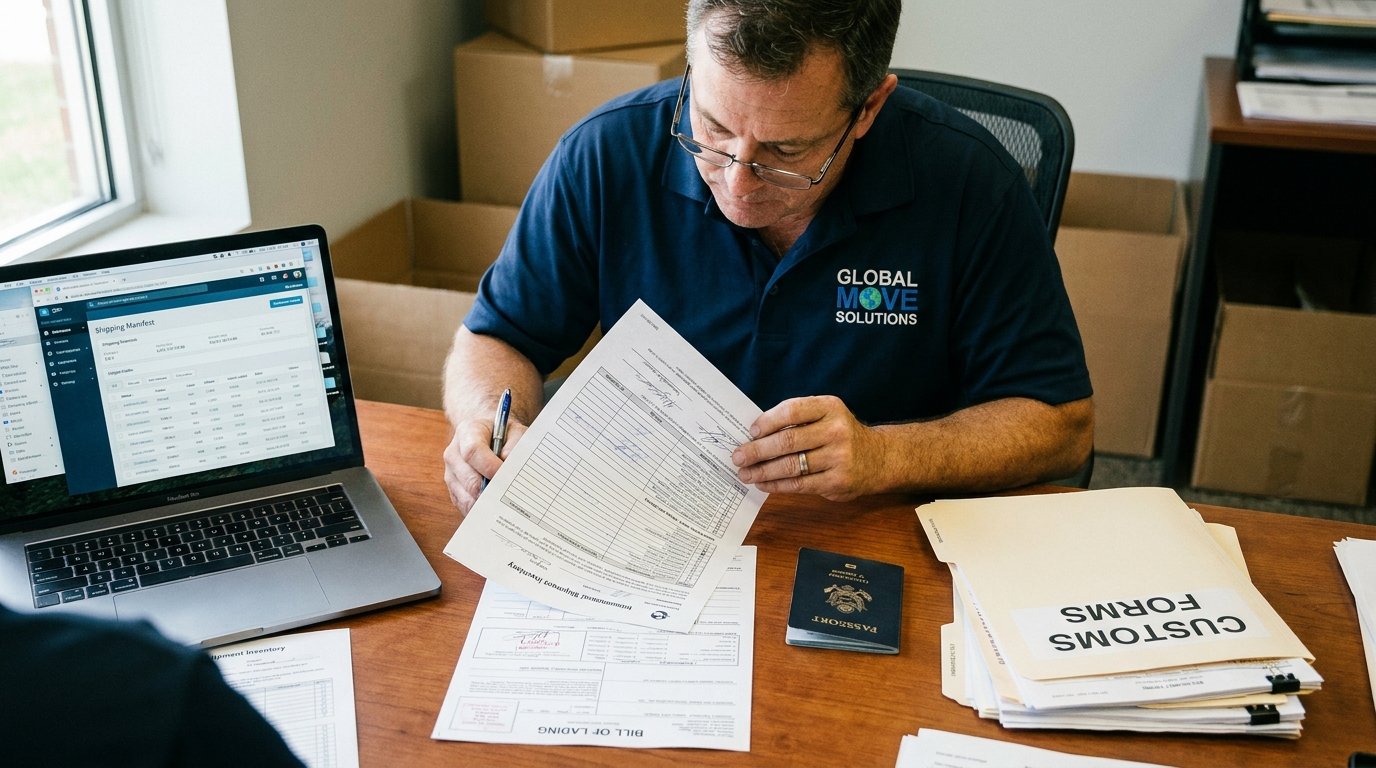
Every international household goods shipment requires a detailed inventory. Not a rough list of boxes, but a line-by-line itemization of contents with estimated values. This document serves multiple purposes. Customs authorities use it to assess whether duties apply, whether restricted or prohibited items are present, and whether the declared value of the shipment is credible.
For most countries, the inventory must be prepared in a specific format and often translated or certified. It must accompany a bill of lading, which is the formal contract between the shipper and the carrier documenting what was loaded, where it is going, and under what terms. The bill of lading must match the inventory exactly. Discrepancies between these two documents. Even minor ones. Are grounds for a customs hold.
Beyond the inventory and bill of lading, most destination countries require proof of the shipper's status. Are you a returning resident? A new immigrant? A diplomat? Each category carries different import privileges and different documentation requirements. A returning Canadian citizen moving household goods back from overseas, for example, may qualify for duty-free importation. But only with the right supporting documents filed correctly before the shipment arrives.
For specialized items, the requirements go further. Moving a piano internationally. Whether a baby grand piano, an upright piano, or a concert instrument. Requires documentation of the instrument's country of origin, its value, and in some cases its wood species, because certain exotic hardwoods are regulated under international wildlife trade agreements. Fine art moving and antique moving across borders trigger additional valuation and provenance requirements. Electronics moving may require compliance certifications. Missing any one of these triggers an automatic hold.
How Brokers Make This Worse
The moving industry has a structural problem that directly contributes to international customs failures: the broker model. A moving broker takes your booking, collects a deposit, and subcontracts the actual move to a carrier they may never have worked with before. In a domestic move, this creates risk of damage and unreliability. In an international move, it creates a documentation chain with no single accountable party.
When a shipment is booked through a broker, the paperwork is often prepared by the subcontracted carrier. A company that may have limited experience with your specific destination country's requirements. The broker has already been paid. The subcontractor's incentive is to move the shipment as quickly as possible, not to audit the documentation for compliance. The person who pays for this gap is you, standing in a new country waiting for your household goods.
A licensed direct carrier. One that operates its own fleet, maintains its own warehouse, and employs its own logistics coordinators. Has a fundamentally different accountability structure. When Quick Transfer moves a shipment internationally from Winnipeg as a licensed United Van Lines agent, every document in that shipment is prepared, reviewed, and filed by the same team that loaded the truck. There is no handoff. There is no version of events where the broker blames the carrier and the carrier blames the broker while your piano sits in a bonded warehouse in Rotterdam.
The Items That Trigger Customs Problems Most Often
Not all household goods carry equal customs risk. Certain categories attract scrutiny in almost every destination country, and failing to document them properly is the fastest way to turn a straightforward international move into a months-long ordeal.
Musical instruments. Piano moving internationally is one of the most documentation-intensive categories in household goods shipping. Beyond the standard inventory requirements, instruments made with certain woods. Rosewoods, ebonies, some mahoganies. Fall under the Convention on International Trade in Endangered Species. A baby grand piano moving from Winnipeg to Europe may require a CITES permit if the instrument contains regulated materials. International piano moving without this documentation does not just cause a customs hold. It can result in confiscation.
A licensed direct carrier has a fundamentally different accountability structure. One where the same team that loaded your shipment is responsible for every document in it.
Antiques and fine art. Art and antique moving across borders requires valuation documentation, proof of ownership, and in some cases export permits from the country of origin. Canada has its own export controls on cultural property. If you are moving a piece that qualifies as a cultural artifact under Canadian law, you may need an export permit before the shipment can legally leave the country. Fine art moving and antique moving without these clearances can result in seizure at the Canadian border, not just the destination.
Food, plants, and soil. This category catches people off guard more than any other. Winnipeg homeowners moving internationally often include preserved foods, spices, potting soil, or houseplants in their shipment without realizing that most countries have strict agricultural import controls. A single prohibited item discovered during customs inspection can trigger a full examination of the entire shipment.
Electronics and appliances. Electronics moving internationally raises two separate issues: voltage compatibility (which is the owner's problem) and electrical safety certification (which is the customs authority's concern). Some countries require proof that imported electronics meet local safety standards. Appliances that do not carry the right certification may be refused entry or held pending inspection.
Vehicles. Vehicle moving and vehicle transport internationally involves a separate customs process entirely, with its own documentation, duty calculations, and compliance requirements. Attempting to include a vehicle in a household goods shipment rather than processing it as a separate import is a common mistake that causes delays for both.
What a Proper Pre-Move Consultation Covers
The way to avoid all of this is not to become an expert in international customs law yourself. It is to work with a mover who has documented experience in international moving and who conducts a proper pre-move consultation before anything is packed.
A thorough moving consultation for an international shipment should cover the destination country's specific requirements, the shipper's residency and import status, a complete inventory review with particular attention to high-risk categories, the timeline for documentation submission relative to the shipment's departure date, and the insurance and valuation coverage for the move.
Custom crating and crating services for fragile or high-value items should also be addressed at this stage. Fragile item packing and fragile item moving require documentation of condition before the shipment leaves. Both for insurance purposes and because some destination countries require condition reports for high-value household goods.
For corporate relocation and employer-sponsored moves, the consultation should also address whether the employee qualifies for any duty-free import provisions under their destination country's immigration category, and what documentation the employer needs to provide to support that claim. Corporate relocation failures at customs are particularly costly because they delay an employee's ability to start work, which has downstream consequences for the employer that go well beyond storage fees.
What 67 Years of Moving Experience Actually Means
Quick Transfer has been moving Winnipeg families and businesses since 1957. That is not a marketing claim. It is a description of what happens when a family-owned company builds its reputation one move at a time across three generations.
For international moving, that experience translates directly into documentation competence. The team at Pandora Avenue East has prepared shipments for destinations across Europe, Asia, Australia, and the Americas. They know which destination countries require translated inventories. They know which instruments trigger CITES review. They know the lead time required for export permits on cultural property. And as a licensed United Van Lines agent, they have access to a global network of destination agents who handle the receiving end of the move with the same accountability standards.
This is what separates a full-service mover from a broker: the depth of knowledge that only comes from doing this work repeatedly, under your own name, with your own equipment and your own people. When something in the documentation requires a second look, the person who catches it is the same person whose family built this company.
Get Your International Move Right the First Time
If you are planning an international move from Winnipeg, the time to address customs requirements is before the truck is loaded, not after it arrives at the port. The documentation errors that cause shipments to be held are almost always preventable with proper planning and a mover who knows what they are doing.
Contact Quick Transfer Moving and Storage for a free moving consultation. As Winnipeg's licensed United Van Lines agent with a physical warehouse on Pandora Avenue East and 67 years of family-owned moving experience, they can walk you through every documentation requirement specific to your destination and your situation. Before a single box is packed.

Ralph Mueller
President
Ralph Mueller leads Quick Transfer Moving and Storage through its third generation of serving Winnipeg families and businesses. As President, he oversees the company's full-service operations from residential and commercial moves to specialized freight and international logistics—while maintaining the United Van Lines partnership and the physical facility on Pandora Avenue East that anchors the company's local credibility. His perspective reflects a commitment to reliability and professionalism that has built Quick Transfer's reputation over 67 years in the market.
More from Ralph Mueller →